Ciny is a managed service, not a collection of tools you have to operate. Your team supplies the business knowledge and decisions. Our team coordinates the research, production and review across the agreed areas of work.
Bring the context that changes the answer: the offer, the audience, the evidence and the decisions your team needs to make.
Agree the scope and responsibilities
Choose the work with a useful purpose
Review the asset before arranging release
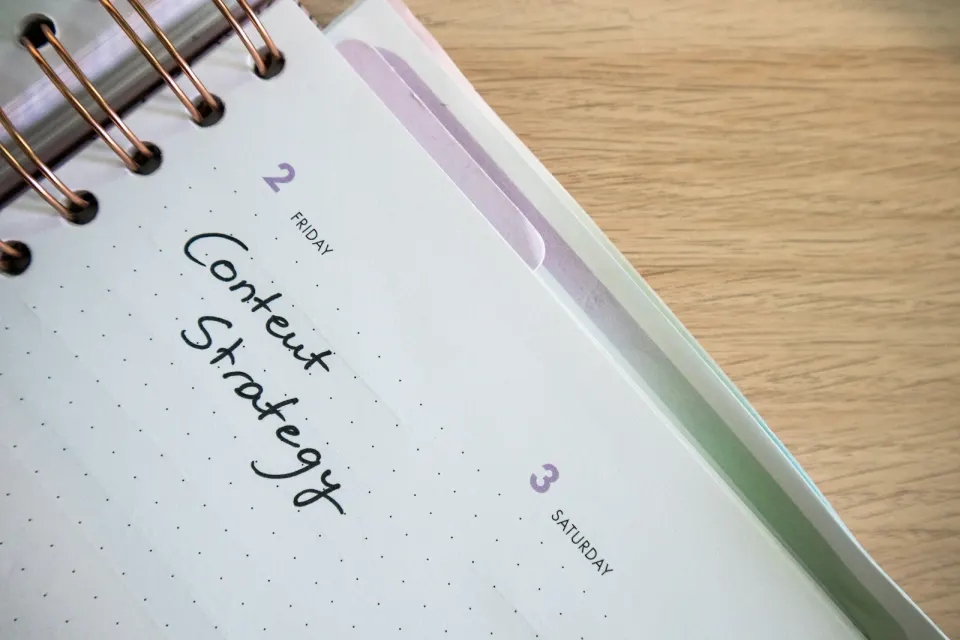
The brief is agreed before production starts.Illustrative stock photo by Scott Graham on Unsplash.
How the work moves
One process.Six considered steps.
Each step turns a clear input into an output your team can inspect.
Onboarding begins with the offer, audience and constraint. A team struggling to explain a specialist service needs different work from a team with a useful website but no regular content production. We establish that distinction before choosing deliverables.
Bring the material you already use to sell and support the service: product explanations, common customer questions, brand guidance and approved examples. Mark anything that is out of date, confidential or not cleared for publication. The Data Hub is the client workspace for this context. An uploaded document is an input to review, not automatic proof that every statement is current.
Business inputs
Your offers, audience, terminology, existing content and the facts you are prepared to put your name to.
Access and scope
The pages, accounts and reporting relevant to the engagement. A connection needs to be checked before work relies on its data.
Decision ownership
Who can clarify a claim, review an asset and agree that work is ready for the next stage.
A brief should settle the difficult questions before production: who is reading, what are they trying to decide, which facts support the answer and what should happen next? It also identifies the format and the pages or channels the work will support.
Illustrative stock photo by Walls.io on Unsplash.
Research and available search data help choose priorities. A reported query is not automatically a reason to create a new page. If an existing service page can answer the question, improving that page may be the better decision. A separate guide makes sense when it has a genuinely different teaching purpose.
Production depends on the agreed format. An article needs a coherent explanation and useful links. A carousel needs a sequence that works slide by slide. A website revision needs to fit the surrounding navigation and enquiry journey.
AI can support research, drafting and variations, but it does not supply missing business evidence. The team uses the approved context, inspects the output and requests changes where the draft is vague or unsupported. The completed text, images, captions and links belong in the same review.
Articles and guides
Check whether the answer is complete enough for its reader, whether examples clarify a decision and whether the next link is relevant.
Social assets
Review the caption and visual together. A short post still needs enough context to avoid a misleading impression.
Website changes
Inspect the proposed copy and layout against the actual page, including its mobile reading and enquiry path.
04
Separate idea approval from release approval.
Approving a topic authorises work on that direction. It does not mean the eventual article, image or carousel is ready to publish. Finished work needs its own review, and a material revision needs to be assessed again.
The Eye, a panel of AI reader personas (20 by default), scores content after it is written. It can help expose an unclear hook or weak explanation, but it does not block publishing. Those perspectives are not feedback from real customers and do not independently verify facts. Editorial judgment and business knowledge remain necessary.
Resolve feedback against the version being discussed. A useful comment identifies the disputed claim, explains what is wrong and supplies the correct source or wording. A vague request to make something more engaging gives the next draft little direction.
Decisions in a content cycle
Decision
What it establishes
What it does not establish
Approve the brief
The reader, purpose and direction
Approval of an unwritten asset
Review the finished work
The text and visuals are acceptable for the agreed use
That a later revision is also approved
Arrange release
A channel and publication plan
Proof that publication succeeded
05
Confirm release through the agreed channel.
The team plans approved work through the supported website and channel workflow. A calendar date helps coordinate the plan, but it is not a publication receipt. Access, connected providers and the implementation route need to be clear.
For website work, reviewing a draft and deploying it are separate activities. Agree who controls the source and hosting, what will change and how the result will be checked. For content, verify the actual published page or supported channel confirmation before describing the item as live.
Cadence, asset quantities and turnaround are matters for the agreed scope. They are not universal promises attached to every Ciny engagement.
06
Turn the review into the next decision.
Reporting should help choose an action. Search observations can suggest a missing answer, a page receiving the wrong queries or a useful guide that needs better internal links. Content feedback can identify an explanation the audience repeatedly needs.
Compare consistent date windows and record the page changes that occurred between them. A change in traffic does not, on its own, identify the cause. Brand demand, seasonality, query mix and measurement gaps may also affect the result.
The next cycle starts with a priority and its evidence, not a commitment to publish more simply because a calendar has space.
Yes. The scope can begin with content, search or website work. The other areas can be added when there is a clear dependency or business need.
Who needs to be involved from our side?
Someone who understands the offer and can approve business claims, plus the people responsible for relevant account access and final decisions. Establish those responsibilities at onboarding.
How long does onboarding take?
Timing depends on the scope, available material, access and review responsibilities. There is no single turnaround promise for every engagement. Agree the milestones before work starts.
What happens when a factual correction arrives after review?
The affected asset should be corrected and the changed version reviewed again. If it has already been released, assess the published version and any related assets that repeat the same claim.
Start with youractual priorities.
Tell us what you sell, who you need to reach and where the work gets stuck. We can discuss the scope from there.