
Who this is for
Businesses that need to connect search queries to relevant offers, rather than accumulate rankings for topics their customers never buy.
Use queries available in Search Console to prioritise research, tracking and on-page work.
Search Console sync, rank tracking, keyword discovery and the Focus work queue run on Ruh AI's data, synced on demand by the Ciny team. Answer-ready articles and page audits for AI search are Live. On-page fixes, programmatic page proposals and live rank checks are in build. Local SEO and automated AI-answer monitoring are planned.
Module overview
Ciny adds no minimum-impression filter, but cannot recover queries Google withholds. The Focus work queue ranks pages by measured Search Console evidence, not by modelled revenue or promised traffic.
Service scope
Businesses that need to connect search queries to relevant offers, rather than accumulate rankings for topics their customers never buy.
Search Console access or an export, your priority offers, existing URLs and target markets. Missing query data stays unknown rather than being estimated.
Search Console sync, keyword discovery, position tracking and the Focus page work queue. On-page fixes and programmatic page proposals are in build. Local SEO and automated AI-answer monitoring are planned.
Illustrative example
A service page may already appear for a useful query but earn few clicks. Review intent and the result snippet before commissioning a second page on the same subject.
Compare clicks, impressions, CTR and average position across equivalent periods. Connect enquiries separately, because rankings alone do not establish business impact.
What runs inside
You pay for what you switch on. Each automation shows its status, so you can choose where to start.
Compare every automationDiscover queries reported in Search Console without an added impression threshold. This complements external keyword datasets, but cannot expose anonymised or otherwise withheld queries.
Compare Search Console average position, clicks and CTR across query snapshots. Live rank checks, alerts, volume and CPC are in build. A missing query needs investigation, and its absence is not proof of a lost ranking.
Click-through and page-overlap findings are built and tested, with the first run through Ciny's controls to follow. Nothing changes your pages automatically.
Ciny proposes page families from Search Console evidence. Your team or your frontend builds and releases them. Ruh AI's 349 construction pages were built by its own site team, and the results are published here.
Planned: location pages, profile management and local query tracking.
Answer-ready article structure and answer-structure page audits run for Ruh AI. Citation tracking from Bing Webmaster AI exports and hand-checked AI Overviews is in build. Automated monitoring of AI answers is planned, and no citation is guaranteed.

From observations to priorities
A search report is a starting point for investigation. Connect the query, the destination and the information a visitor still needs.
Illustrative stock photograph, not Ciny software or customer results.
Start with the services you sell, the pages that represent them and the available search reporting. Inspect which queries lead to which pages before choosing a content calendar or a list of fixes.
Relevant impressions with few clicks, an inaccessible page and traffic arriving on the wrong page are different problems. The first action should follow the diagnosis. Where an account is not connected or there is too little data, record that gap and use business knowledge and a page review to frame the next investigation.
Search support is a fit when a team needs to turn observations into priorities. It is not an offer of a guaranteed position, a guaranteed number of leads or privileged access to a search engine's ranking systems.
Group related queries when the same page can satisfy the reader. Choose a primary destination for the group, then decide whether to improve, combine or create content.
This is a planning example, not a keyword-volume forecast. Demand, the current results and commercial relevance need investigation. A slight change in wording does not justify another page if the existing answer already serves the same need.
| Reader need | Primary destination | What makes the page useful |
|---|---|---|
| Compare content support | Content service page | Formats, inputs, review and scope |
| Understand the engagement | How It Works | Responsibilities and delivery decisions |
| Learn how mapping works | Keyword-mapping guide | A method and a worked example |
A useful explanation cannot help search visitors if the intended page is unavailable or excluded from indexing. Conversely, an indexable page may still fail to answer the reader's question.
An audit should identify its coverage and the evidence behind each finding. Avoid treating a sampled crawl as an exhaustive review or a lab score as proof of real-user performance.
Review responses, indexability, canonical URLs and whether important pages can be found through internal links.
Check whether the title, headings and main answer describe the same subject and contain the information a buyer needs.
Investigate page experience issues alongside the actual mobile reading and enquiry path.
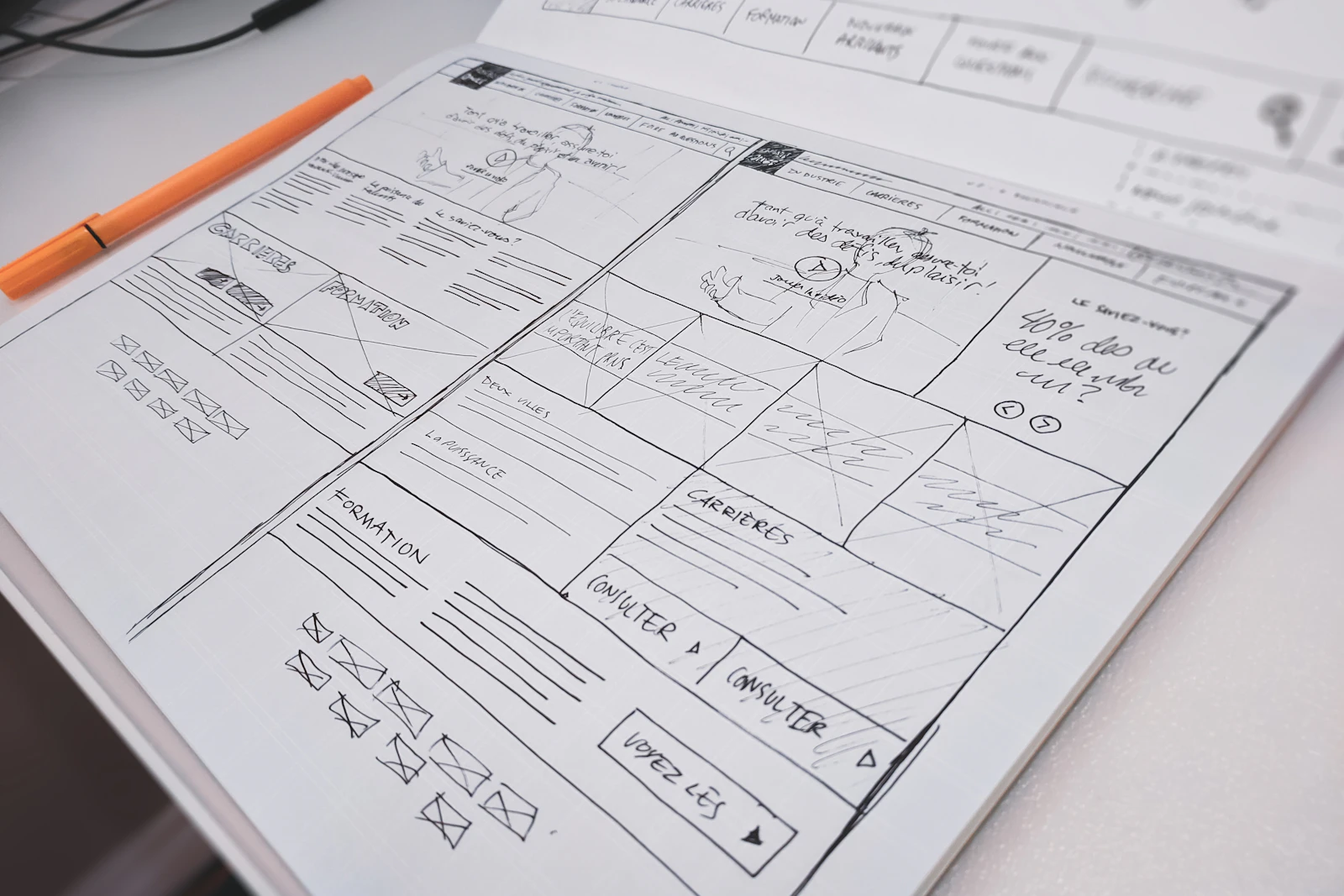
The destination matters
Page structure, the missing explanation and the next useful link all affect whether the destination answers the searcher's question.
Turn a finding into a briefA useful search brief names the missing answer, the page it belongs on, the evidence required and the next step for the reader. It also identifies related pages that should be connected.
Keep original business knowledge central. Do not fill the brief with keyword variations, unsupported comparisons or claims that competitors cannot make. If the facts do not support a promised outcome, remove the promise.
Use clicks, impressions, click-through rate and average position together. Compare equivalent periods and preserve country, device and search-type filters. Keep a record of page changes and relevant business events.
Search Console average position summarises the reported impressions; it is not a fixed daily rank for every searcher. Some queries are missing or aggregated. A missing query in an export is not evidence of a zero position.
For Google generative AI visibility, its current Search Console documentation describes a dedicated impressions report. Review the pages and filters available in that report separately from ordinary query-position comparisons. This does not establish citation tracking across other AI providers or a live connection inside every Ciny dashboard.
| Observation | Question to investigate |
|---|---|
| More impressions, stable clicks | Did query mix, position or search appearance change? |
| Several pages appear for similar queries | Do they serve different needs or compete for the same purpose? |
| A revised page gains clicks | Were the comparison periods and other changes comparable? |
Useful business explanations, technical accessibility and clear internal links remain relevant. Special AI markup, an arbitrary paragraph length or a file named llms.txt is not a shortcut to Google visibility.
Check the property's current Search generative AI inclusion setting as well as normal indexing and snippet eligibility. Meeting the requirements does not guarantee that a page will be selected.
The service does not promise rankings, AI citations or invented share-of-answer figures. Any reported AI observation should identify the source, date and scope.
Read the AI search guide and its sourcesSearch, with a plan
SEO gets clearer when each search has an intended destination. We connect the language customers use to a page that answers their question.
Then we track relevant query groups and page performance over consistent periods, and use the evidence to choose what to improve.
See the keyword-to-page methodA worked example · Ciny's own website
Each page has a distinct job for the reader.
The system behind it
Every module runs the same five moves: read the signals, decide what is worth doing, make it, hold it for approval, then measure what it changed. The signals and the output differ. The discipline does not.
Signals in
Piper · Search Console in. A ranked work list out.
The Focus queue
Automation roles
Piper owns this module. Julia does the research inside it, the same way she does inside all three, so every brief starts from your data rather than a content calendar template.
Module Lead
Syncs Search Console on demand and compares keyword movement between windows, so the work list reflects the latest synced data.
R&D
Scores brand fit so off-topic traffic stays off the work list. The scoring is built and tested, with its first live run at onboarding.
On-page
Drafts title and page-overlap recommendations for a person to review. This work is in build, and nothing changes your pages automatically.
Verification
Freezes the baseline when page work starts. Before-and-after measurement is built and tested but has not yet run on a Ciny engagement.
Scope notes
Work in practice
Two stories with different evidence levels. Read each source and its limits.
All case studiesFirst-party measurement
Organic leads, with the evidence attached.
Weekly organic leads rose from 6 in early July to 20 in the week of 24 August 2026. August paid spend was $0.
Discuss your goalsPublished Ruh AI customer story
A more connected marketing workflow.
Ruh AI reports 37% more leads for Rapid Innovation after introducing AI-supported research, publishing and lead qualification.
Discuss your goalsThese studies explain the wider work behind Ciny. They do not establish results for every capability. Live, Available, In build and Planned labels still apply.
Modules are switched on and off per account. Start with one, add the others when the first has earned it.